
AI Governance
You Can’t Govern What You Can’t See
AI is increasingly embedded across healthcare vendors, products, and workflows — often without clear disclosure or consistent governance.
Through structured workflows, Censinet helps healthcare organizations identify hidden AI exposure, evaluate operational and clinical impact, and operationalize AI governance across their vendor and product portfolios.
AI Visibility Across Your Vendor Portfolio
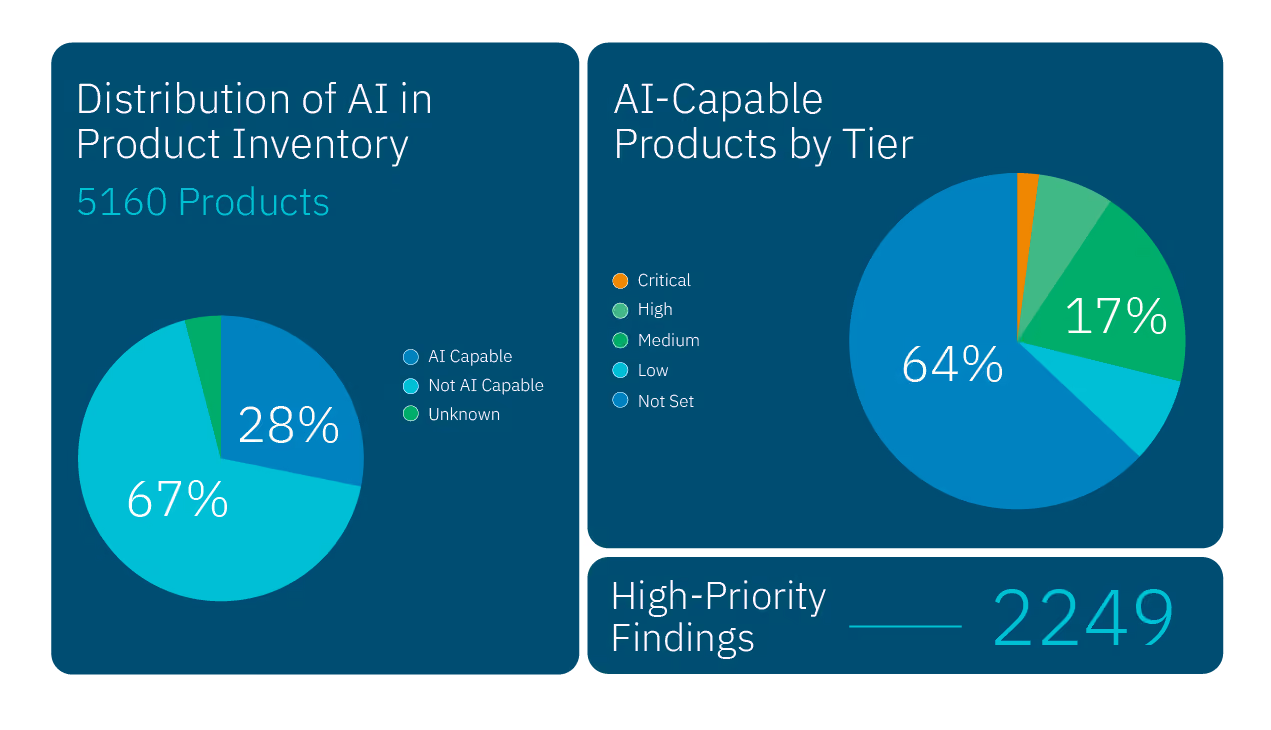
AI capabilities evolve faster than annual assessment cycles can track. Censinet AI Telemetry continuously classifies products across your inventory as AI-enabled, not AI-enabled, or unknown — giving healthcare organizations the visibility needed to operationalize AI governance with facts instead of assumptions.



Evaluate AI Beyond Security Controls
AI governance requires more than reviewing technical safeguards alone.
Censinet enables healthcare organizations to launch structured AI evaluations across ethical, clinical, operational, and regulatory domains — including bias, transparency, model safety, and workflow integration.
Aligned to the NIST AI Risk Management Framework, evaluations provide defensible documentation, governance oversight, and structured remediation.
Censinet enables healthcare organizations to launch structured AI evaluations across ethical, clinical, operational, and regulatory domains — including bias, transparency, model safety, and workflow integration.
Aligned to the NIST AI Risk Management Framework, evaluations provide defensible documentation, governance oversight, and structured remediation.
Cross-Functional Oversight by Design
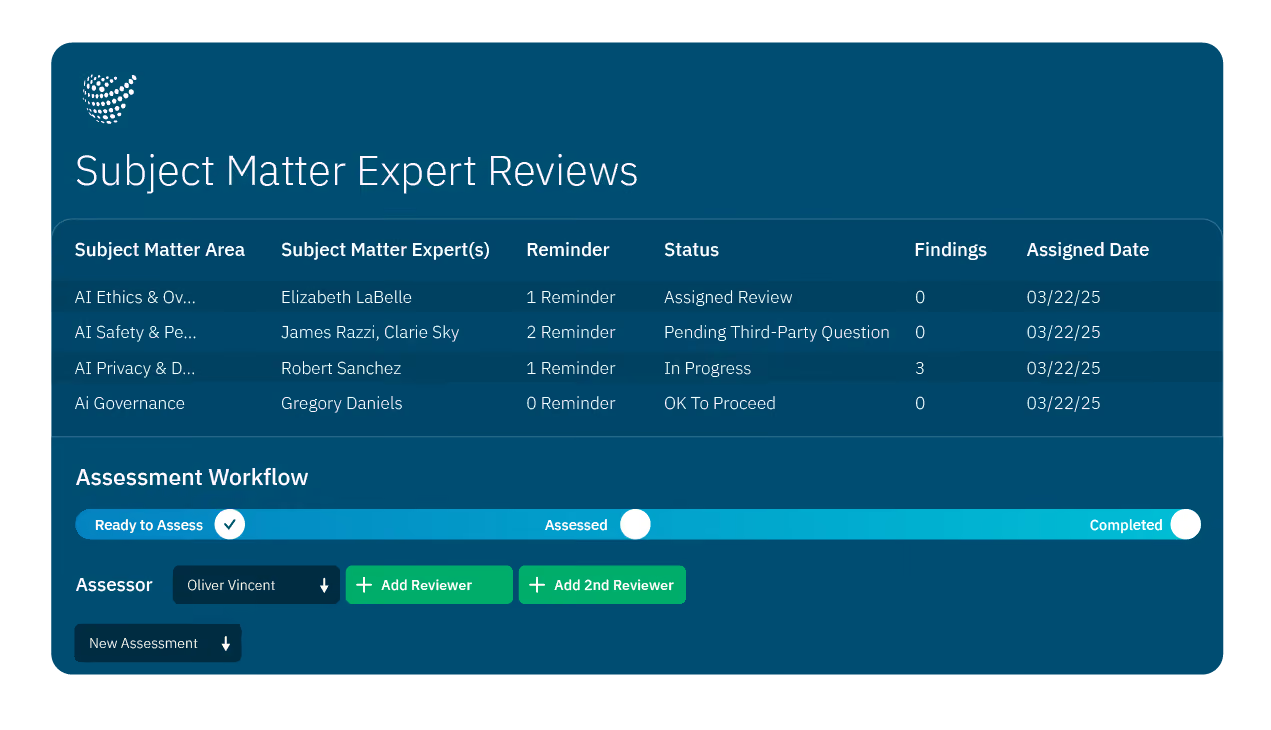
AI governance requires coordinated oversight across clinical, operational, compliance, and security teams. Censinet automatically routes AI evaluations and identifies risks to the appropriate stakeholders for review, collaboration, and accountability. Governance becomes embedded into operational workflows instead of disconnected review processes.
- Clinical leadership
- Ethics and equity teams
- Information security
- Privacy and compliance
- Legal and regulatory
- Risk management and audit
Integrated Into Unified Risk Oversight
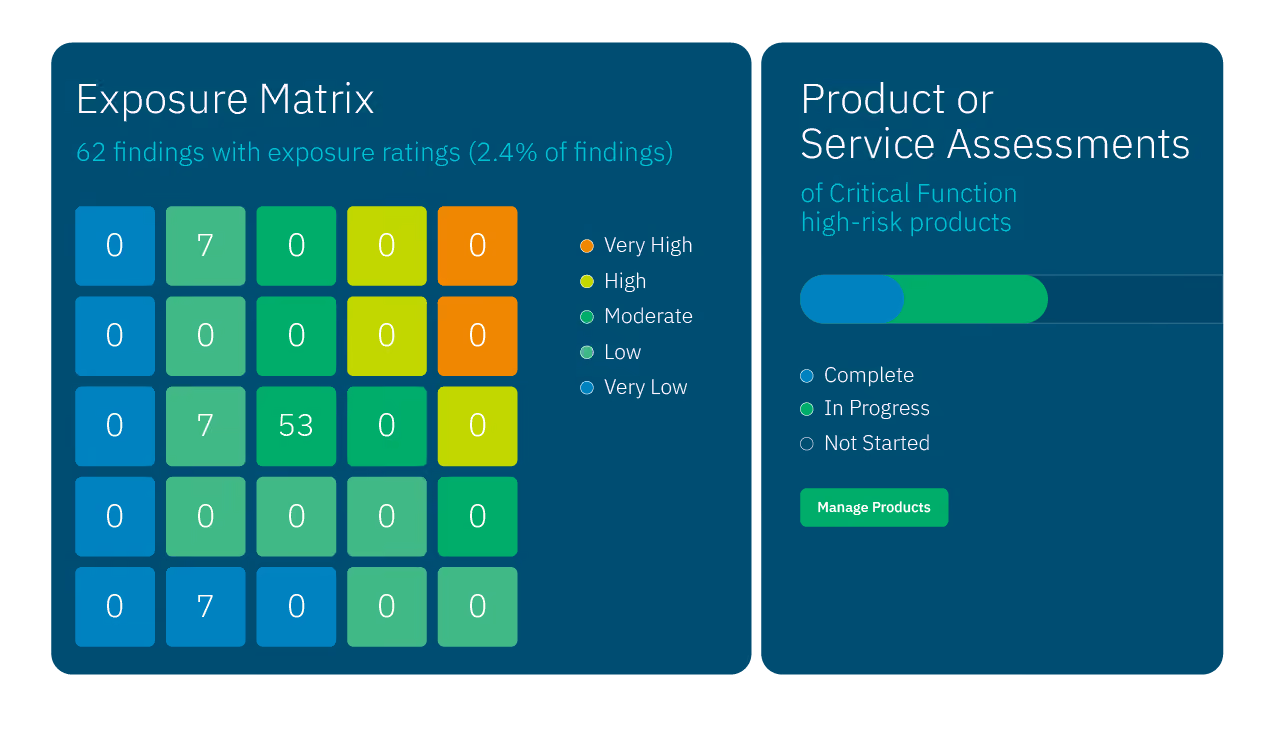
AI-related risk insights surface alongside third-party, enterprise, and systemic risk intelligence within the Censinet RiskOps™ Platform — giving leadership a unified view of AI exposure across critical healthcare functions.
Governance becomes embedded within enterprise risk oversight instead of operating as a disconnected initiative.
Governance becomes embedded within enterprise risk oversight instead of operating as a disconnected initiative.
